Subject: World, Gazetteer & Almanac
Period: 1853-56 (published)
Publication:
Color: Black & White
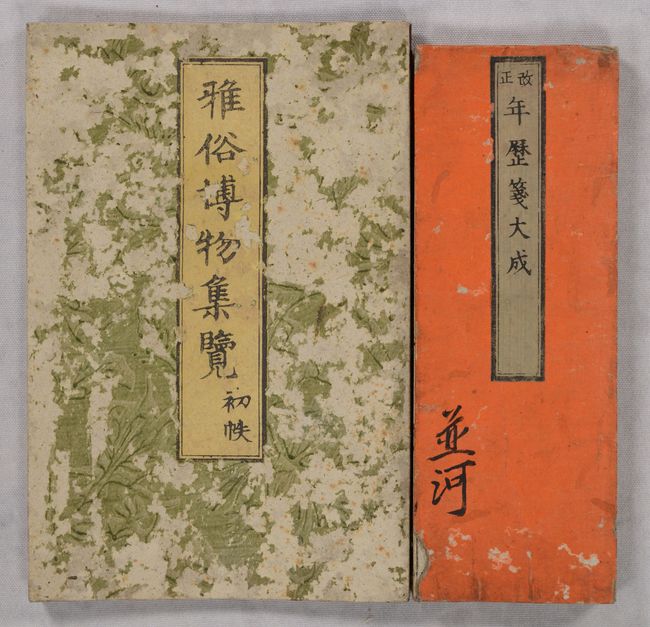
A. [Japanese Gazetteer] Gazoku Hakubutsu Shuran, Kaei 6, dated 1853 (4.8 x 7.2"). This gazetteer was published the year Commodore Perry's expedition arrived in Japan. The Perry Expedition consisted of two American military and diplomatic missions (1852-55) to visit the Tokugawa shogunate with the goal of establishing diplomatic relations and negotiating trade agreements. This government had a strict isolationist policy and few foreign visitors gained entry over its 250-year existence (1603-1868). While Perry’s first visit was limited in success, his second journey (1854-55) assured the diplomatic and trade ties that the U.S. sought. Japan’s opening of its doors eventually led to the fall of the Tokugawa shogunate and the restoration of Emperor Meiji.
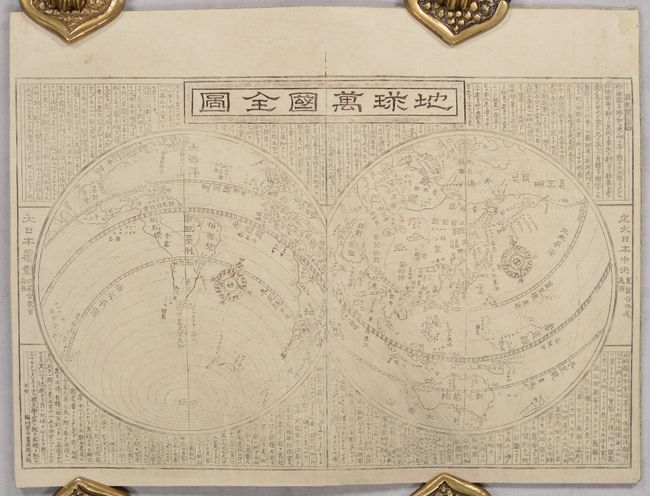
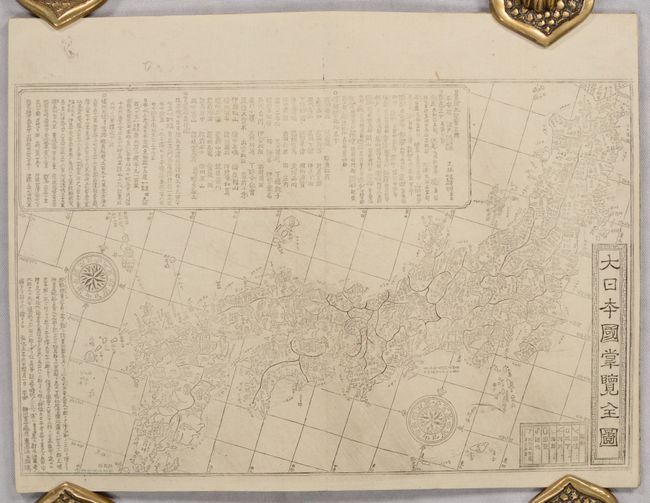
This gazetteer includes two copperplate maps: a double-hemisphere map of the world and a map of Japan. The fact that these maps are copperplate is quite unique as most Japanese printing was done in woodblock at the time. The world map was created by Matsuda Rokuzan and is titled Chikyu Bankoku Zen Zu (9.2 x 5.8") and merges western knowledge with an eastern perspective. Japan is featured at the center of the eastern hemisphere while Europe, the Middle East, and North America are partially obscured. The map of Japan (9.2 x 5.8") omits Hokkaido but has good detail of regions, towns, and more.
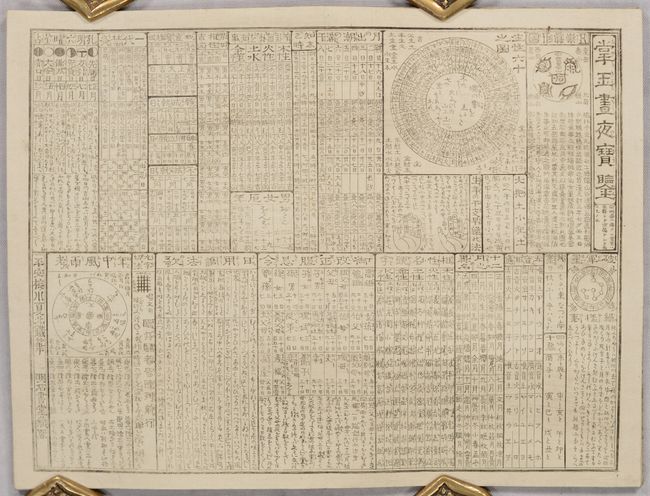
The eight pages of text within the gazetteer include information on fortune telling and several Banzuke (rankings) of Samurai swords and sword makers. The gazetteer has stiff paper covers.
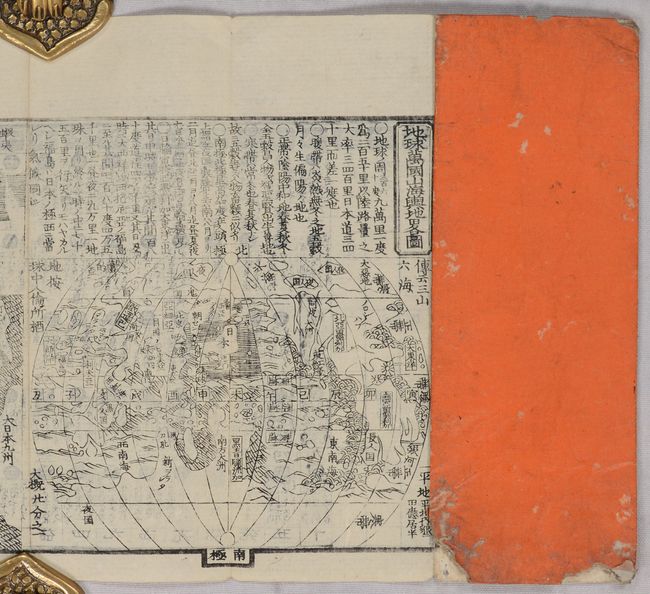
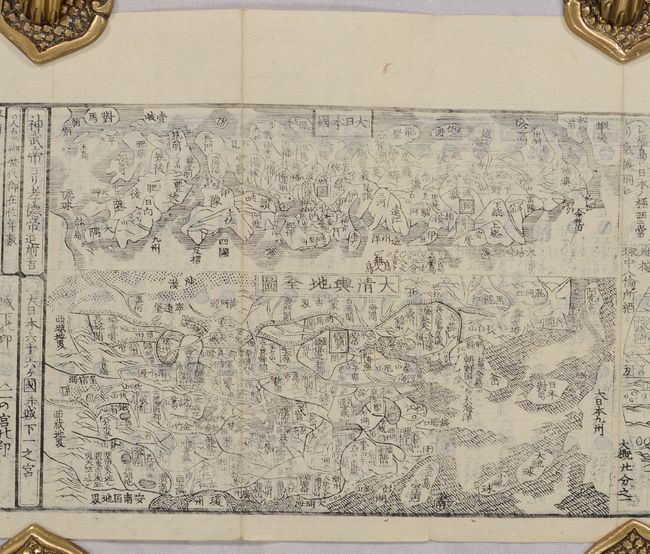
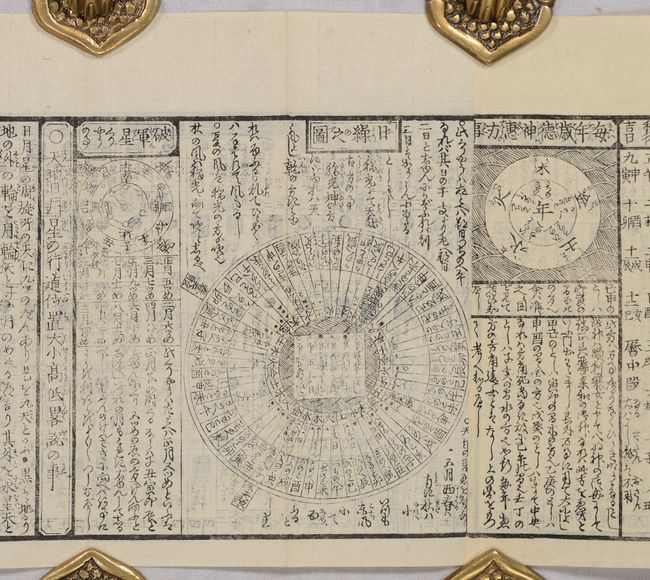
B. [Japanese Almanac] Nenreki, Ansei 3, dated 1856 (123.5 x 5.5"). This almanac includes small, woodblock maps of the world, Japan, and China. There are also circular diagrams that show a traditional eastern calendar and astrological system, the solar system, a star chart, the phases of the moon, and solar and lunar eclipses. The almanac folds accordion-style into stiff paper covers.
References:
Condition: B+
The maps in the gazetteer have some printer's ink residue, and the text pages have minor soiling. The spine is perished and the covers are heavily worn and scuffed. The interior of the almanac is clean and bright and the covers have small chips, abrasions, and some soiling.